

FortiVoice FVE-1000F Phone System in Africa
A business phone environment must do more than connect calls. It should help teams answer customers consistently, route enquiries to the right people, support branch and remote users, control extensions, protect voice services, and give administrators a clear way to manage daily communication. The requested FortiVoice FVE-1000F platform is positioned for organisations considering a larger Fortinet-based communications deployment. FourTeck supports the buying process with model confirmation, capacity review, licence planning, compatible endpoint guidance, deployment discussion and regional quote assistance.
✓ Configuration Review
✓ Africa Delivery Coordination
✓ Warranty Guidance
Quick Product Information
Product Overview
Business communication becomes difficult when different departments use disconnected telephone lines, personal mobile numbers, isolated conferencing tools and manually maintained extension lists. Calls are missed, transfers take too long, customer histories are incomplete, remote users appear outside the office system, and administrators spend too much time making small changes. A centrally managed FortiVoice deployment is designed to bring core voice and collaboration functions into a more consistent environment where extension policies, call routing, voicemail, conferencing, user access and system monitoring can be handled through a common administrative platform.
The FVE-1000F name is commonly requested by buyers looking for a FortiVoice appliance in the larger enterprise range. However, enterprise communications products are purchased by exact order code, software release, support term and licensed capacity rather than by a familiar model label alone. FourTeck therefore treats the requested designation as the start of a technical and commercial review. Before a quotation is finalised, the team should confirm the currently orderable equivalent, supported number of endpoints, SIP trunk capacity, storage design, network interfaces, power arrangement, call-centre requirements, hotel or property-management functions where applicable, and the support bundle required by the customer.
For organisations that select the correct FortiVoice platform, the main value is operational control. Reception teams can use structured call flows instead of relying on informal transfers. Departments can have ring groups and queues aligned with working hours. Staff can access voicemail and user features without every change becoming an administrator ticket. Remote and hybrid users can participate in the company communication environment through supported clients and endpoints. Managers can review call-handling patterns, while IT teams can maintain a clearer inventory of extensions, trunks, gateways and phones.
This type of phone system can fit headquarters, regional offices, hospitals, universities, banks, hotels, logistics businesses, government departments, professional service firms and customer-support environments. The design must still reflect the real workload. An organisation with one thousand registered users but light simultaneous calling has different needs from a contact centre with fewer users and much higher concurrent call activity. Analogue lines, fax requirements, emergency calling rules, branch survivability, call recording, data retention, network quality and security policies also influence the final architecture.
Africa buyers often need more than a catalogue description. They may need help identifying a current model, checking whether existing FortiFone or third-party SIP devices are suitable, planning gateways for analogue services, confirming local carrier compatibility, reviewing WAN quality, coordinating cross-border delivery and understanding support coverage. FourTeck assists with these practical questions so the selected phone system reflects the actual business environment rather than an assumed capacity figure.
Key Business Benefits
◆ Consistent Customer Call Handling
Auto attendants, ring strategies, queues and extension rules can create a repeatable route for incoming calls. This helps customers reach the correct department more quickly and reduces dependence on one receptionist remembering every person and schedule.
◆ Centralised Administration
A common management environment gives IT teams a clearer way to create extensions, adjust call flows, assign permissions, manage supported endpoints and review system activity. Central control reduces fragmented changes across separate telephone devices and services.
◆ Better Support for Hybrid Teams
Supported desktop and mobile communication options can allow authorised users to work with their business extension beyond a fixed desk. This helps organisations keep a professional calling identity while staff move between offices, customer sites and remote locations.
◆ Scalable Planning
A properly sized enterprise phone platform gives buyers room to plan for new departments, branch integration, more endpoints and changing call patterns. Scalability should be confirmed using current licensed limits and realistic concurrency rather than total employee count alone.
◆ Integrated Collaboration
FortiVoice platforms can bring calling, conferencing, voicemail, fax-related workflows and supported chat or client functions into a more unified experience. This can simplify daily communication and reduce the number of disconnected tools staff must learn.
◆ Stronger Voice Governance
Administrators can apply more deliberate rules for extensions, access, call routing and system management. Security still depends on network design, software maintenance, credentials, firewall policies and operational discipline, but central control supports a more governed voice environment.
◆ Procurement Clarity
A structured buying review helps reveal costs that are easy to miss, including phones, headsets, gateways, support terms, licences, rack equipment, power protection, cabling, deployment services, carrier changes and future renewals.
These benefits are strongest when the platform is designed around business processes rather than installed as a simple replacement for an old PBX. Call flows should reflect real opening hours, escalation paths, language needs, service-level targets and department ownership. Network quality must support voice traffic, and staff should understand how to transfer calls, use voicemail, manage presence and follow security procedures. FourTeck can help buyers identify these requirements during the quotation stage so the hardware and licensing discussion remains connected to measurable operational needs.
Product Highlights
Supports a unified approach to business calling, conferencing, voicemail, extension services and compatible client access.
Gives authorised administrators a central location for configuration, user management, call routing and operational review.
Enables structured greetings, auto attendants, queues, ring groups, schedules, voicemail and transfer workflows.
Can be planned with FortiFone devices, supported soft clients and selected third-party SIP endpoints after compatibility review.
FortiVoice gateway options can help connect analogue lines or extensions where the final appliance and release support them.
Certain FortiVoice models support additional call-centre or hotel functions; exact licensing and capacity must be confirmed.
Fortinet describes FortiVoice as a secure unified communications platform with integrated calling, conferencing, chat, fax and mobility options. The practical result for a buyer is a platform that can be adapted to different communication roles: a receptionist needs fast transfer and visibility, a service agent needs queue handling, a manager needs reliable reachability, a remote worker needs a supported client, and an administrator needs central control. The selected appliance must be able to support these roles together without exceeding endpoint, trunk, storage or feature limits.
Codec support, network conditions and endpoint choice also affect user experience. Current FortiVoice documentation includes common audio formats such as G.711, G.729a, G.722 and Opus, with video support depending on the feature and endpoint environment. Buyers should confirm carrier and device compatibility, especially where bandwidth is limited, transcoding may be required, or legacy analogue equipment remains in use.
Technical Specifications
| Specification Area | Buyer Reference |
|---|---|
| Brand | Fortinet FortiVoice |
| Requested Model | FVE-1000F; exact current appliance or replacement order code must be confirmed |
| Product Type | Enterprise unified communications and IP phone system platform |
| Primary Functions | Business calling, extensions, call routing, voicemail, conferencing, compatible client access and administration |
| Endpoint Capacity | Configuration dependent; verify current licensed and supported endpoint limit |
| SIP / VoIP Trunks | Configuration dependent; confirm carrier design, concurrent calls and current platform limit |
| Network Interfaces | Model dependent; confirm port count, speed, management interfaces and redundancy design |
| Storage | Model dependent; confirm voicemail, recording and retention requirements |
| Audio Codecs | FortiVoice platform support includes common codecs such as G.711, G.729a, G.722 and Opus; final support depends on release and endpoint |
| Video Codecs | Platform documentation includes H.263 and H.264 support; confirm feature, phone and client compatibility |
| Compatible Devices | FortiFone IP phones, supported soft clients, FortiVoice gateways and selected third-party SIP devices after validation |
| Management | Central web-based administration, user portal functions, configuration and monitoring features |
| Optional Functions | Call-centre, hotel or property-management functions may require supported model, software and licences |
| Power and Form Factor | Confirm current appliance chassis, rack requirements, power input and redundant power option |
| Support | FortiCare term and service level selected separately or through an applicable hardware bundle |
| Availability | Contact FourTeck for current orderable model, regional supply route and quotation |
The table deliberately avoids assigning unverified capacities to the FVE-1000F name. The current FortiVoice appliance range includes multiple hardware and virtual tiers, and product generations can change. A reliable quotation should identify the exact order code and match it to a current Fortinet datasheet or ordering guide. FourTeck recommends sharing the expected number of users, maximum simultaneous calls, SIP carrier design, analogue line requirements, call recording policy, voicemail retention, call-centre agent count, branch locations and support term. Those details allow the sales and technical teams to determine whether the requested model remains orderable, has been replaced, or should be delivered through another appliance or virtual platform.
Configuration and Buyer Guidance
A phone-system purchase should begin with communication patterns, not a hardware label. The first question is how many people need extensions, but this is only one part of capacity planning. Buyers should estimate the highest number of simultaneous internal and external calls, identify busy periods, separate office users from contact-centre agents, and decide whether remote users, mobile clients, meeting rooms, lobby phones, analogue devices or fax workflows must be included.
1. User and Call Volume
List total extensions, concurrent call expectations, departments, queue agents, supervisors and seasonal peaks. This helps avoid sizing only by employee count.
2. Carrier and Trunk Design
Confirm whether the organisation will use SIP trunks, analogue lines, PRI services, multiple carriers or a mixed transition design. Carrier interoperability must be checked.
3. Network Readiness
Review switching, PoE, VLANs, quality-of-service policies, WAN stability, internet latency, firewall rules and backup connectivity before phones are deployed.
4. Phone and Client Selection
Choose endpoint types for executives, reception, shared spaces, agents, meeting rooms and remote users. Headsets, expansion modules and power requirements may differ.
5. Recording and Retention
Define which calls may be recorded, how long files are retained, who can access them and what local laws or internal policies apply.
6. Resilience and Support
Decide whether redundant power, backup links, branch survivability, spare phones, configuration backups and an enhanced support term are required.
Compatibility is especially important during migration. Existing SIP phones may technically register but still lack full provisioning, feature-key support or secure management. Analogue door phones, paging systems, fax devices and legacy trunks may require gateways. Firewalls and session-border policies must be planned carefully so that voice traffic works without exposing unnecessary services. A staged deployment with testing, user training, number-porting coordination and a rollback plan is normally safer than changing every site at once.
Ideal Business Use Cases
Corporate Headquarters
A headquarters may need hundreds of extensions, executive assistants, reception consoles, department queues, meeting rooms, shared phones, mobility and structured call routing. A centrally managed platform helps standardise these functions while giving IT a common operational view.
Customer Service Operations
Service desks and contact teams need queues, announcements, agent control, escalation paths, supervisor visibility and reporting. Buyers should confirm the licensed agent capacity and concurrency required for the intended service level.
Multi-Branch Organisations
Banks, retailers, logistics groups and professional firms may want branch extensions to follow common numbering and policy. The design must account for WAN reliability, local emergency calling, carrier choices and what happens if a branch loses connectivity.
Healthcare Networks
Hospitals and clinics use voice communication for reception, wards, pharmacies, laboratories, administration and emergency coordination. Reliability, clear escalation rules, restricted administration and power protection are critical planning factors.
Universities and Education
Campuses can use a unified platform for faculty offices, admissions, security, accommodation, help desks and administration. Device variety, paging requirements, building connectivity and large extension directories should be reviewed early.
Hospitality and Guest Services
Hotels may require front-desk workflows, room extensions, wake-up functions, guest-service routing and property-management integration. These functions depend on supported licences, model capacity and compatible hotel systems.
Government and Public Services
Public institutions often manage many departments, service lines and regional offices. A planned phone environment can improve directory control, reception consistency and internal communication while supporting governance and procurement requirements.
Remote and Hybrid Work
Supported soft clients can help remote staff use business extensions rather than personal numbers. Security, internet quality, headset standards, user authentication and support procedures should form part of the rollout.
The same appliance can produce very different outcomes depending on call-flow design and user adoption. For example, a university may prioritise large extension directories and campus security, while a customer-service operation may prioritise queue statistics and supervisor tools. A hotel may need property-management integration, while a bank may focus on branch continuity and controlled administration. FourTeck uses the use case to guide the model discussion, helping buyers avoid paying for irrelevant functions or overlooking a requirement that becomes expensive to add later.
FortiVoice FVE-1000F Centralised Call Management
Centralised call management is one of the strongest reasons to move from a collection of separate telephone services to an enterprise communication platform. A business can define how calls enter the organisation, which greeting is played, where calls are routed during working hours, what happens after hours, how unanswered calls escalate, and which users can change specific settings. This consistency is valuable when customers contact different branches or departments and expect the same professional experience.
Administrators can build extension plans that reflect departments, locations or roles. Ring groups can distribute calls to several staff members, while queues can hold callers for service teams. Auto attendants can reduce pressure on reception by directing routine enquiries, but they should remain simple enough for callers to understand. Voicemail boxes, notifications and user portals help employees manage missed calls. Conference functions can support internal and external collaboration without requiring every meeting to begin on a separate platform.
The business benefit is not simply feature count. It is the ability to align call behaviour with ownership. Every queue should have a responsible manager. Every after-hours route should have a clear destination. Every emergency number should be tested. Every extension should have an assigned user or location. When these controls are documented, the phone system becomes easier to operate, audit and support.
FourTeck recommends preparing a call-flow map before deployment. This map should show public numbers, departments, menus, queues, failover destinations, time schedules, voicemail handling and escalation contacts. It gives technical teams a clearer configuration target and helps business managers approve the customer experience before implementation. The final FVE platform should then be sized to support those flows, the expected call volume and the selected endpoints.
FortiVoice FVE-1000F Secure Communications Planning
Voice systems are networked applications and should be protected with the same discipline used for other business services. Exposed SIP services, weak administrator credentials, outdated firmware, permissive firewall rules and unmanaged remote extensions can create risk. A FortiVoice deployment can support secure communication features, but security depends on how the entire environment is designed, configured and maintained.
Administrators should restrict management access, use strong authentication, apply role separation where practical, maintain configuration backups and review software updates. Voice VLANs can separate phones from general user traffic, while quality-of-service rules help prioritise real-time communication. Firewalls should allow only required signalling and media paths, and remote access should follow a documented approach rather than broad internet exposure. Logging and alerting should be reviewed so that unusual registration attempts, failed authentication and unexpected calling patterns can be investigated.
Toll fraud is another important concern. International calling permissions should be based on business need, not enabled by default for every extension. Outbound route rules, time restrictions, PIN controls where supported and account monitoring can reduce exposure. Departing employees should have access removed quickly, and shared phones should use appropriate permissions. Call recording and voicemail data also need access controls because they may contain customer, financial or operational information.
Security planning should include the carrier, firewall, switch, endpoint, remote client and administrative process. FourTeck can help buyers identify the products and design questions that need attention, while final implementation should be carried out by qualified voice and network professionals. The goal is a communication service that remains practical for users without leaving avoidable technical or operational gaps.
FortiVoice FVE-1000F Scalability and Business Continuity
A phone system should support the organisation that exists today while leaving a realistic path for planned growth. Scalability is not only the maximum number of registered endpoints. Buyers must also consider simultaneous calls, queue agents, trunks, voicemail storage, call recording, conferencing, gateways, branch connections and administrative load. A platform can appear large enough on one headline figure while becoming constrained by another workload.
Growth planning should include mergers, new branches, seasonal staff, additional service lines and changes in customer communication. It may be sensible to reserve capacity, but excessive over-sizing can increase initial cost and support expense. The better approach is to choose a current platform tier that handles expected growth and has a documented upgrade or migration path. FourTeck can help compare neighbouring hardware and virtual options when the requested model is unavailable or no longer the best fit.
Business continuity requires more than a large appliance. Organisations should review power protection, generator or UPS coverage, redundant network paths, carrier diversity, configuration backups, spare endpoints and recovery procedures. Branches that depend on a central system need a plan for WAN outages. Critical departments may need alternative numbers or mobile escalation. Support terms should match the organisation’s tolerance for downtime and the availability of local technical skills.
A continuity plan should be tested. Teams should know how incoming calls behave during a carrier failure, what happens when the main site is unreachable, how configuration is restored, who contacts the service provider and how customers are informed. These operational details matter as much as appliance specifications. FourTeck’s buying guidance helps customers include resilience questions early, before the project is limited by a purchase order that covers only the central hardware.
What Buyers Should Check Before Purchase
Before requesting a quote, buyers should confirm the required configuration, usage environment, compatibility needs, warranty expectations and delivery location. This is especially important for the FVE-1000F request because the exact current appliance designation must be validated. FourTeck can review these details so the proposed solution matches the business requirement instead of being selected only by model name or a historical specification.
Configuration Fit
Provide total endpoints, peak concurrent calls, SIP trunks, call-centre agents, voicemail needs, recording requirements, conferencing use and expected growth. Ask for the exact order code and current capacity document.
Compatibility Check
List existing FortiFone and third-party SIP phones, analogue devices, fax machines, paging systems, door phones, switches, firewalls and carriers. Compatibility should include provisioning and feature support, not only basic registration.
Licences and Renewals
Confirm whether call-centre, hospitality, soft-client, support or other functions require separate entitlements. Understand the licence term, renewal route and what features remain available if a subscription expires.
Deployment Requirements
Check rack space, power, UPS protection, cooling, PoE switching, voice VLANs, WAN quality, firewall policies, cabling, number porting, training and cutover support. These items affect the project even when they are not part of the appliance box.
Availability and Warranty
Ask whether the requested model is currently orderable, what replacement is recommended, where support will be registered, which hardware replacement level applies and how regional delivery or customs coordination will be handled.
Long-Term Cost
Budget for phones, gateways, support renewals, carrier services, headsets, implementation, training, spare units, power protection and future expansion. The appliance price is only one part of the communication system lifecycle.
Alternative Model Guidance
Request a comparison with the current hardware tier below and above the proposed platform, plus a virtual option where suitable. The best choice depends on capacity, resilience, deployment standards and supportability.
Quote Preparation
Share the delivery country and city, organisation type, user count, branch count, carrier details, desired support term, target deployment date and whether installation services are required. Better input produces a more accurate proposal.
Bulk and project supply should also include an itemised bill of materials. The list should identify the central platform, support bundle, endpoint quantities by role, power supplies, headsets, expansion modules, gateways, licences, rack accessories and any spare units. This prevents the project from arriving with the main appliance but missing the smaller components needed for a usable rollout.
Africa Availability and Service Support
FourTeck supports FortiVoice enquiries across Africa with assistance for product selection, model confirmation, configuration review, quotation, delivery coordination and warranty guidance. Availability can vary according to the exact appliance, selected support term, supplier status, regional order code, quantity and destination. For this reason, the FVE-1000F request should be checked against the latest orderable Fortinet platform before the customer commits to a design or budget.
The sales discussion can cover the central phone system, compatible FortiFone devices, soft-client needs, gateways, headsets, switching, firewall requirements and power protection. FourTeck can also help identify suitable related products where a complete voice-network solution is required. Installation and advanced configuration should be scoped separately according to the number of sites, existing PBX environment, carrier migration, number porting and user-training needs.
Warranty handling depends on the selected supply route and FortiCare entitlement. Buyers should confirm the registered end-customer details, service level, replacement process, country coverage and renewal responsibility. FourTeck can provide guidance during the quotation stage, but final service conditions are governed by the purchased contract and manufacturer terms.
Africa Country and Regional Coverage
Businesses across Africa, including Kenya, Uganda, Nigeria, Ghana, Tanzania, Rwanda, Ethiopia, South Africa, Zambia, Botswana, Senegal and nearby markets can contact FourTeck for current product availability, configuration guidance and quotation assistance. Regional projects may involve one headquarters, multiple branches, call-centre operations, hospitality sites, public service locations or education campuses. Each design should reflect the local carrier environment, available WAN links, power conditions, customs process and technical support requirements.
For multi-country organisations, it is useful to standardise extension numbering, phone models, security policies, support terms and documentation while allowing for local carrier differences. A central procurement plan can reduce inconsistent equipment choices, but deployment schedules may still vary by destination. Buyers should provide a site list, endpoint count by location, local telephone service type and planned rollout sequence.
FourTeck can help coordinate the buying conversation and direct customers to the appropriate regional platform. Visit FourTeck Africa, FourTeck Kenya or FourTeck Uganda for regional enquiries and contact guidance.
GCC, Middle East and Africa Availability
FourTeck Africa can support product enquiries for businesses across Africa while also guiding regional technology requirements through selected FourTeck platforms for GCC and Middle East markets. Organisations operating in the UAE, Saudi Arabia, Qatar, Oman, Bahrain and African countries may want a consistent communication standard across branches, but they should still confirm local carrier rules, numbering plans, emergency calling requirements, import procedures, support coverage and deployment resources.
Availability, delivery options, warranty handling and configuration support can vary by country, product generation, supplier status and order quantity. A cross-region project should begin with a site schedule showing users, call volume, existing equipment, carrier services and target dates. This makes it easier to identify which components can be standardised and which require local alternatives.
Customers with GCC and Middle East requirements can also review FourTeck UAE for the relevant regional contact route. The goal is to coordinate a practical platform choice without assuming that one appliance code, licence or service bundle applies identically in every country.
Other FourTeck Solutions Buyers May Consider
A reliable business phone deployment depends on the surrounding network and security environment. Buyers may need switching for phone connectivity and PoE, wireless access for mobile work areas, firewall controls for secure internet and SIP handling, messaging protection for the wider collaboration environment, and smaller or larger FortiVoice models depending on current portfolio availability. The following FourTeck pages provide useful starting points for related infrastructure discussions.
FortiSwitch FS-424E-POE
A managed PoE access switch option for connecting IP phones, access points and other powered network devices.
FortiAP FAP-433G
A business wireless access point for organisations planning modern indoor connectivity alongside voice and collaboration services.
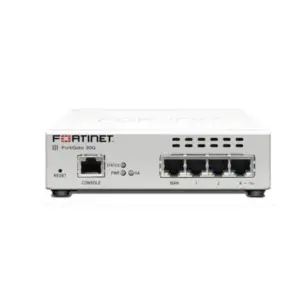
FortiGate 31G
A compact Fortinet firewall for smaller branches that need secure internet access, VPN and controlled network services.
FortiMail FML-200F
A dedicated email security appliance for organisations reviewing broader communication protection and message control.
FortiVoice 500F Class
A lower hardware tier may suit organisations whose verified endpoint and trunk requirements do not justify a larger platform.
FortiVoice 2000F Class
A higher current appliance tier may be appropriate when endpoint, trunk, storage or resilience needs exceed the proposed platform.
These options are not direct replacements in every project. The correct combination depends on the number of phones, PoE budget, VLAN design, wireless density, firewall capacity, carrier architecture and support plan. FourTeck can help assemble a bill of materials that keeps the communication platform, network and security layers compatible.
Why Buyers Choose FourTeck
Enterprise communication projects involve more decisions than a simple hardware purchase. FourTeck helps buyers organise those decisions, compare suitable models and prepare a clearer request for quotation. The role is to connect business requirements with product selection, associated infrastructure and regional procurement realities.
Assistance with central appliance, endpoints, gateways, network equipment, accessories and project quantities.
Review of users, concurrent calls, trunks, features, branch design, licences, compatibility and growth assumptions.
A structured quotation path based on the exact order code, support term, quantity, destination and required services.
Support for regional delivery discussion, destination details, project scheduling and multi-site procurement planning.
Help understanding selected FortiCare terms, registration details, replacement expectations and renewal responsibility.
Comparison with current FortiVoice hardware or virtual tiers when the requested model is not orderable or not the best fit.
FourTeck supports small and medium businesses, enterprise buyers, resellers, system integrators and project teams. The sales process works best when the customer shares clear technical and commercial information. In return, the buyer should receive an itemised proposal, current model confirmation and transparent notes about configuration-dependent items. This reduces avoidable changes after approval and helps procurement, finance and IT teams evaluate the same solution.
Frequently Asked Questions
What is the FortiVoice FVE-1000F used for?
It is requested as an enterprise phone-system platform for centralised calling, extension management, call routing, voicemail, conferencing, compatible soft clients and professional customer communication. The exact currently orderable appliance should be confirmed before purchase because model generations and capacity tiers can change.
Is the FVE-1000F currently available in Africa?
Availability depends on the exact Fortinet order code, supplier status, support bundle, quantity and delivery destination. FourTeck can check whether the requested designation is orderable, has a current replacement, or should be quoted through another hardware or virtual FortiVoice tier.
How many users and calls can it support?
The page does not assign an unverified capacity to this model name. Buyers should confirm registered endpoints, simultaneous calls, SIP trunks, call-centre agents, conferencing and storage against the current datasheet and order code. FourTeck can use your workload details to identify the correct tier.
Can FourTeck help with configuration planning?
Yes. The team can review user count, call volume, branches, carriers, analogue requirements, endpoint types, licences, network readiness, power protection, support term and delivery location. Advanced installation and migration services should be scoped according to the final project.
Does FortiVoice work with third-party SIP phones?
Selected third-party SIP devices may be usable, but compatibility should include provisioning, feature keys, codecs, security, firmware and supportability rather than basic registration alone. FortiFone models generally provide a more integrated management experience within the FortiVoice environment.
Can analogue lines and devices be connected?
Analogue trunks, extensions, fax devices, paging systems or door phones may require compatible FortiVoice gateways or another approved interface. The required FXO, FXS or digital connectivity should be listed before quotation so the bill of materials includes the correct gateway capacity.
What warranty and support options are available?
Support is normally selected through an applicable FortiCare contract or hardware bundle. Service levels, replacement terms, registration and country coverage depend on the purchased entitlement. FourTeck can explain the quoted term and help buyers understand renewal and warranty-handling expectations.
What information is needed for a quote?
Provide the delivery country and city, user count, concurrent call estimate, branch count, carrier type, analogue requirements, desired phones, call-centre or hospitality functions, recording needs, support term, project timeline and whether installation assistance is required.
Can businesses request bulk or multi-site supply?
Yes. Multi-site projects should include an endpoint schedule by location, required accessories, carrier details, rollout sequence and local technical contacts. FourTeck can help coordinate the product list and regional quotation, while deployment arrangements are confirmed separately.
What alternatives should be compared?
Buyers should compare the current FortiVoice hardware tier below and above the required capacity, plus an appropriate virtual model where infrastructure standards allow it. The decision should consider capacity, redundancy, storage, supportability, cost and future expansion rather than model number alone.
Need Help Choosing the Right FortiVoice Platform?
FourTeck can help review the requested model, current availability, endpoint and trunk requirements, compatible phones, gateway needs, support term and delivery destination. Share your communication workload to receive a more accurate configuration discussion and quotation path.
Reviews
There are no reviews yet.